Taboos on eating fish

Environmental impact of fish consumption

Taboos on eating fish

Among the Somali people, most clans have a taboo against the consumption of fish, and do not intermarry with the few occupational clans that do eat it.[54][55]

There are taboos on eating fish among many upland pastoralists and agriculturalists (and even some coastal peoples) inhabiting parts of southeastern Egypt, Ethiopia, Eritrea, Somalia, Kenya, and northern Tanzania. This is sometimes referred to as the "Cushitic fish-taboo", as Cushitic speakers are believed to have been responsible for the introduction of fish avoidance to East Africa, though not all Cushitic groups avoid fish. The zone of the fish taboo roughly coincides with the area where Cushitic languages are spoken, and as a general rule, speakers of Nilo-Saharan and Semitic languages do not have this taboo, and indeed many are watermen.[55][56] The few Bantu and Nilotic groups in East Africa that do practice fish avoidance also reside in areas where Cushites appear to have lived in earlier times. Within East Africa, the fish taboo is found no further than Tanzania. This is attributed to the local presence of the tsetse fly and in areas beyond, which likely acted as a barrier to further southern migrations by wandering pastoralists, the principal fish-avoiders. Zambia and Mozambique's Bantus were therefore spared subjugation by pastoral groups, and they consequently nearly all consume fish.[55]

There is also another center of fish avoidance in Southern Africa, among mainly Bantu speakers. It is not clear whether this disinclination developed independently or whether it was introduced. It is certain, however, that no avoidance of fish occurs among southern Africa's earliest inhabitants, the Khoisan. Nevertheless, since the Bantu of southern Africa also share various cultural traits with the pastoralists further north in East Africa, it is believed that, at an unknown date, the taboo against the consumption of fish was similarly introduced from East Africa by cattle-herding peoples who somehow managed to get their livestock past the aforementioned tsetse fly endemic regions.[55]

Certain species of fish are also forbidden in Judaism such as the freshwater eel (Anguillidae) and all species of catfish. Although they live in water, they appear to have no fins or scales (except under a microscope) (see Leviticus 11:10–13[57]). Sunni Muslim laws are more flexible in this and catfish and shark are generally seen as halal as they are special types of fish. Eel is generally considered permissible in the four Sunni madh'hab, but the Ja'fari jurisprudence followed by most Shia Muslims forbids it.[58][59][60]

Many tribes of the Southwestern United States, including the Navaho, Apache, and Zuñi, have a taboo against fish and other water-related animals, including waterfowl.[61]

Dishes

--
You received this message because you are subscribed to the Google Groups "1top-oldtattoo-1" group.
To unsubscribe from this group and stop receiving emails from it, send an email to 1top-oldtattoo-1+unsubscribe@googlegroups.com.
To view this discussion on the web visit https://groups.google.com/d/msgid/1top-oldtattoo-1/CAGNPKm%3DRLFGixXqY4SZBYOOGO_-sOcXSEdSLnmSjmup00QsSaw%40mail.gmail.com.

Fish can be prepared in a variety of ways

Preparation

See also: Fish processing

Fish can be prepared in a variety of ways. It can be served uncooked (raw food, e.g., sashimi); cured by marinating (e.g., ceviche), pickling (e.g., pickled herring) or smoking (e.g., smoked salmon); or cooked by baking, frying (e.g., fish and chips), grilling, poaching (e.g., court-bouillon) or steaming. Many of the preservation techniques used in different cultures have since become unnecessary but are still performed for their resulting taste and texture when consumed.[citation needed]

The British historian William Radcliffe wrote in Fishing from the Earliest Times:

"The Emperor Domitian (Juvenal, IV.) ordered a special sitting of the Senate to deliberate and advise on a matter of such grave State importance as the best method of cooking a turbot."[5]

Nutritional value

Comparison of nutrients in 100 g of whitefish or oily fish
Nutrient Whitefish
Alaska pollock[6]
Oily fish
Atlantic herring[7]
Halibut fillet (a whitefish) on top of a salmon fillet (an oily fish)
Energy (kcal) 111 203
Protein (g) 23 23
Fat (g) 1 12
Cholesterol (mg) 86 77
Vitamin B-12 (μg) 4 13
Phosphorus (mg) 267 303
Selenium (μg) 44 47
Omega-3 (mg) 509 2014

Globally, fish and fish products provide an average of only about 34 calories per capita per day. However, more than as an energy source, the dietary contribution of fish is significant in terms of high-quality, easily digested animal proteins and especially in fighting micronutrient deficiencies.[2] A portion of 150g of fish provides about 50 to 60 percent of an adult's daily protein requirement. Fish proteins are essential in the diet of some densely populated countries where the total protein intake is low, and are particularly important in diets in small island developing States (SIDS).[2]

Intermediate Technology Publications wrote in 1992 that "Fish provides a good source of high quality protein and contains many vitamins and minerals. It may be classed as either whitefish, oily fish, or shellfish. Whitefish, such as haddock and seer, contain very little fat (usually less than 1%) whereas oily fish, such as sardines, contain between 10–25%. The latter, as a result of its high fat content, contain a range of fat-soluble vitamins (A, D, E and K) and essential fatty acids, all of which are vital for the healthy functioning of the body."[8]

Health benefits

Eating oily fish containing long-chain omega-3 fatty acids may reduce systemic inflammation and lower the risk of cardiovascular disease.[9][10] Eating about 140 grams (4.9 oz) of oily fish rich in omega-3 fatty acids once per week is a recommended consumption amount.[9][10] Increasing intake of omega-3 fatty acids may slightly reduce the risk of a fatal heart attack,[10] but likely has little effect on the overall number of deaths from cardiovascular disease.[11]

Health hazards

Fish bone is the most common food-related foreign body to cause airway obstruction. Choking on fish was responsible for about 4,500 reported accidents in the United Kingdom in 1998.[12]

Allergens

Main article: Fish allergy

A seafood allergy is a food allergy to allergens which can be present in fish. This can result in an overreaction of the immune system and lead to severe physical symptoms[13] from urticaria to angioedema and distributive shock. Allergic reactions can result from ingesting seafood, or by breathing in vapours from preparing or cooking seafood.[14] The most severe allergic reaction is anaphylaxis, a medical emergency requiring immediate attention and is treated urgently with epinephrine.[15]

Biotoxins

A specially prepared dish of the poisonous blowfish fugu, Japan

Some species of fish, notably the fugu pufferfish used for sushi, can result in serious food poisoning if not prepared properly. These fish always contain toxins as a natural defense against predators; it is not present due to environmental circumstances. Particularly, fugu has a lethal dose of tetrodotoxin in its internal organs and must be prepared by a licensed fugu chef who has passed the national examination in Japan. Ciguatera poisoning can occur from eating larger fish from warm tropical waters, such as sea bass, grouper, barracuda and red snapper.[16] Scombroid poisoning can result from eating large oily fish which have sat around for too long before being refrigerated or frozen. This includes scombroids such as tuna and mackerel, but can also include non-scombroids such as mahi-mahi and amberjack.[16] The poison is often odourless and tasteless.[17]

Many fish eat algae and other organisms that contain biotoxins, which are defensive substances against predators. Biotoxins accumulated in fish/shellfish include brevetoxins, okadaic acid, saxitoxins, ciguatoxin and domoic acid. Except for ciguatoxine, high levels of these toxins are only found in shellfish. Both domoic acid and ciguatoxine can be deadly to humans; the others will only cause diarrhea, dizziness and a (temporary) feeling of claustrophobia.[18][19]

Shellfish are filter feeders and, therefore, accumulate toxins produced by microscopic algae, such as dinoflagellates and diatoms, and cyanobacteria. There are four syndromes called shellfish poisoning which can result in humans, sea mammals and seabirds from the ingestion of toxic shellfish. These are primarily associated with bivalve molluscs, such as mussels, clams, oysters and scallops.[20] Fish like anchovies can also concentrate toxins such as domoic acid.[21] If suspected, medical attention should be sought.

Fish and Shellfish poisoning
Poisoning type Symptoms Duration Toxin Antidote Sources
Fish Ciguatera Nausea, vomiting and diarrhea, usually followed by headaches, muscle aches, paresthesia, numbness, ataxia, vertigo, and hallucinations. Weeks to years Ciguatoxin and similar: maitotoxin, scaritoxin and palytoxin None known [17][22]
Scombroid
food
poisoning
Skin flushing, throbbing headache, oral burning, abdominal cramps, nausea, diarrhea, palpitations, sense of unease, and, rarely, collapse or loss of vision. Symptoms occur usually within 10–30 minutes of ingesting spoiled fish. Usually four to six hours Histamine, possibly others Oral anti-histamines [22][23]
Haff disease Rhabdomyolysis, that is, a swelling and breakdown of skeletal muscle (with a risk of acute kidney failure) within 24 hours after consuming fish A toxic cause is suspected but has not been proven None known [24]
Ichthyo-
allyeinotoxism
Vivid auditory and visual hallucinations similar in some aspects to LSD. Can last for several days [25]
Shellfish Amnesic Permanent short-term memory loss and brain damage Fatal in severe cases Domoic acid, which acts as a neurotoxin None known [22]
Diarrheal Diarrhea and possibly nausea, vomiting and cramps. Symptoms usually set in within half an hour and last about a day Okadaic acid, which inhibits intestinal cellular de-phosphorylation. [26]
Neurotoxic Vomiting and nausea and a variety of neurological symptoms such as slurred speech. Not fatal though it may require hospitalization. Brevetoxins or brevetoxin analogs [27][28]
Paralytic Includes nausea, vomiting, diarrhea, abdominal pain, and tingling or burning sensations. Other symptoms also possible. Occasionally fatal Principal toxin saxitoxin 4-Aminopyridine has been used in non-human animals. [29][30][31] [32]

The toxins responsible for most shellfish and fish poisonings, including ciguatera and scombroid poisoning, are heat-resistant to the point where conventional cooking methods do not eliminate them.[17]

Mercury and other toxic metals

Main article: Mercury in fish

Fish products, especially those from apex and higher-order consumers up the food chain, have been shown to contain varying amounts of heavy or toxic metals due to biomagnification. Toxicity is a function of solubility, and insoluble compounds often exhibit negligible toxicity. Organometallic forms such as dimethyl mercury and tetraethyl lead can be extremely toxic.[33]

Mercury/omega-3 levels[34]
Mercury level Low
< 0.04 ppm
Medium
0.04–0.40 ppm
High
> 0.40 ppm
Omega-3
High
> 1.0%
salmon
sardine
Atlantic mackerel
flatfish
halibut
herring
Spanish mackerel
swordfish
tilefish
Medium
0.4–1.0%
pollock hoki
tuna
king mackerel
shark
Low
< 0.4%
catfish
shrimp
cod
snapper
tuna canned light
grouper
orange roughy
mercury/omega-3 levels in commercial fish and shellfish

According to the US Food and Drug Administration (FDA), the risk from mercury by eating fish and shellfish is not a health concern for most people.[41] However, certain seafood contains sufficient mercury to harm an unborn baby or young child's developing nervous system. The FDA makes three recommendations for child-bearing women and young children:

  1. Do not eat shark, swordfish, king mackerel, or tilefish because they contain high levels of mercury.
  2. Eat up to 12 ounces (2 average meals) a week of a variety of fish and shellfish that are lower in mercury. Four of the most commonly eaten fish that are low in mercury are canned light tuna, salmon, pollock, and catfish. Another commonly eaten fish, albacore ("white tuna") has more mercury than canned light tuna. So, when choosing your two meals of fish and shellfish, you may eat up to 6 ounces (one average meal) of albacore tuna per week.
  3. Check local advisories about the safety of fish caught by family and friends in your local lakes, rivers, and coastal areas. If no advice is available, eat up to 6 ounces (one average meal) per week of fish you catch from local waters, but don't consume any other fish during that week.

These recommendations are also advised when feeding fish and shellfish to young children, but in smaller portions.[41]

Mislabelling

When the ocean conservation organization Oceana examined over 1,200 seafood samples of seafood sold in the U.S between 2010 and 2012, they found one-third were mislabelled. The highest rate of mislabelling occurred with snapper at 87 percent, followed by tuna at 57 percent.[42]

Persistent organic pollutants

If fish and shellfish inhabit polluted waters, they can accumulate other toxic chemicals, particularly fat-soluble pollutants containing chlorine or bromine, dioxins or PCBs

--
You received this message because you are subscribed to the Google Groups "1top-oldtattoo-1" group.
To unsubscribe from this group and stop receiving emails from it, send an email to 1top-oldtattoo-1+unsubscribe@googlegroups.com.
To view this discussion on the web visit https://groups.google.com/d/msgid/1top-oldtattoo-1/CAGNPKmkXkSS1aM8D%2Br387DXbK_VwBiOg8ZB3%3Di%3DU782_%3DThJzg%40mail.gmail.com.

Fish as food

From Wikipedia, the free encyclopedia
This article is about fish as food for humans. For sealife in general as food, see seafood. For fish fed to other fish, see commercial fish feed and aquarium fish feed.
Channa striata stuffed with Thai herbs Fish for sale in baskets at the Dubai Fish Market

Many species of fish are caught by humans and consumed as food in virtually all regions around the world. Fish has been an important dietary source of protein and other nutrients throughout human history.

The English language does not have a special culinary name for food prepared from fish like with other animals (as with pig vs. pork), or as in other languages (such as Spanish pez vs. pescado). In culinary and fishery contexts, fish may include so-called shellfish such as molluscs, crustaceans, and echinoderms; more expansively, seafood covers both fish and other marine life used as food.[1]

Since 1961, the average annual increase in global apparent food fish consumption (3.2 percent) has outpaced population growth (1.6 percent) and exceeded consumption of meat from all terrestrial animals, combined (2.8 percent) and individually (bovine, ovine, porcine, etc.), except poultry (4.9 percent). In per capita terms, food fish consumption has grown from 9.0 kg (19.8 lb) in 1961 to 20.2 kg (45 lb) in 2015, at an average rate of about 1.5 percent per year.[2] The expansion in consumption has been driven not only by increased production, but also by a combination of many other factors, including reduced wastage, better utilization, improved distribution channels and growing consumer demand, linked with population growth, rising disposable incomes and urbanization.[2]

Europe, Japan and the United States of America together accounted for 47 percent of the world's total food fish consumption in 1961, but only about 20 percent in 2015. Of the global total of 149 million tonnes in 2015, Asia consumed more than two-thirds (106 million tonnes at 24.0 kg per capita).[2] Oceania and Africa consumed the lowest share. The shift is the result of structural changes in the sector and in particular the growing role of Asian countries in fish production, as well as a significant gap between the economic growth rates of the world's more mature fish markets and those of many increasingly important emerging markets around the world, particularly in Asia.[2]

Species

Over 32,000 species of fish have been described,[3] making them the most diverse group of vertebrates. In addition, there are many species of shellfish. However, only a small number of species are commonly eaten by humans.[citation needed]

Common species of fish and shellfish used for food[4]
Mild flavour Moderate flavour Full flavour
Delicate
texture
Basa, flounder, hake, scup, smelt, rainbow trout, hardshell clam, blue crab, peekytoe crab, spanner crab, cuttlefish, eastern oyster, Pacific oyster Anchovy, herring, lingcod, moi, orange roughy, Atlantic Ocean perch, Lake Victoria perch, yellow perch, European oyster, sea urchin Atlantic mackerel, sardines
Medium
texture
Black sea bass, European sea bass, hybrid striped bass, bream, cod, drum, haddock, porgy, hoki, Alaska pollock, rockfish, pink salmon, snapper, tilapia, turbot, walleye, lake whitefish, wolffish, hardshell clam, surf clam, cockle, Jonah crab, snow crab, crayfish, bay scallop, Chinese white shrimp Sablefish, Atlantic salmon, coho salmon, skate, dungeness crab, king crab, blue mussel, greenshell mussel, pink shrimp Escolar, chinook salmon, chum salmon, American shad
Firm
texture
Arctic char, carp, catfish, dory, grouper, halibut, monkfish, pompano, Dover sole, sturgeon, tilefish, wahoo, yellowtail, abalone, conch, stone crab, American lobster, spiny lobster, octopus, black tiger shrimp, sheepshead, freshwater shrimp, gulf shrimp, Pacific white shrimp, grey triggerfish, squid Barramundi, cusk, dogfish, kingklip, mahimahi, opah, mako shark, swordfish, albacore tuna, yellowfin tuna, geoduck clam, squat lobster, sea scallop, rock shrimp Barracuda, Chilean sea bass, cobia, croaker, eel, blue marlin, mullet, sockeye salmon, bluefin tuna

Preparation

--
You received this message because you are subscribed to the Google Groups "1top-oldtattoo-1" group.
To unsubscribe from this group and stop receiving emails from it, send an email to 1top-oldtattoo-1+unsubscribe@googlegroups.com.
To view this discussion on the web visit https://groups.google.com/d/msgid/1top-oldtattoo-1/CAGNPKmmU3sSy7Tqbz2PKBc4a1SiMefrBVAntZYRvEPUbPeSzuA%40mail.gmail.com.

Health benefits of seafood

Health benefits

The US FDA recommends moderate consumption of fish as part of a healthy and balanced diet.

There is broad scientific consensus that docosahexaenoic acid (DHA) and eicosapentaenoic acid (EPA) found in seafood are beneficial to neurodevelopment and cognition, especially at young ages.[64][65] The United Nations Food and Agriculture Organization has described fish as "nature's super food."[66] Seafood consumption is associated with improved neurologic development during pregnancy[67][68] and early childhood[69] and is more tenuously linked to reduced mortality from coronary heart disease.[70]

Fish consumption has been associated with a decreased risk of dementia, lung cancer and stroke.[71][72][73] A 2020 umbrella review concluded that fish consumption reduces all-cause mortality, cancer, cardiovascular disease, stroke and other outcomes. The review suggested that two to four servings per week is generally safe.[74] However, two other recent umbrella reviews have found no statistically significant associations between fish consumption and cancer risks and have cautioned researchers when it comes to interpreting reported associations between fish consumption and cancer risks because the quality of evidence is very low.[75][76]

The parts of fish containing essential fats and micronutrients, often cited as primary health benefits of eating seafood, are frequently discarded in the developed world.[77] Micronutrients including calcium, potassium, selenium, zinc, and iodine are found in their highest concentrations in the head, intestines, bones, and scales.[78]

Government recommendations promote moderate consumption of fish. The US Food and Drug Administration recommends moderate (4 oz for children and 8–12 oz for adults, weekly) consumption of fish as part of a healthy and balanced diet.[79] The UK National Health Service gives similar advice, recommending at least 2 portions (about 10 oz) of fish weekly.[80] The Chinese National Health Commission recommends slightly more, advising 10–20 oz of fish weekly.[81]

Health hazards

Barracuda found in Florida are avoided due to a high risk of ciguatera. The same fish found in Belize presents a lesser risk due to the lower prevalence of ciguatera-causing dinoflagellates in the Caribbean. Thus, knowing a fish's origin and life history is essential to determining its health hazards. Organic and inorganic compounds including methylmercury, microplastics, and polychlorinated biphenyls (PCBs) can bioaccumulate to dangerous levels in apex predators like swordfish and marlin.
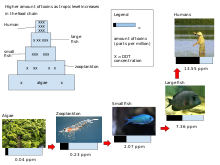
There are numerous factors to consider when evaluating health hazards in seafood. These concerns include marine toxins, microbes, foodborne illness, radionuclide contamination, and man-made pollutants.[77] Shellfish are among the more common food allergens.[82] Most of these dangers can be mitigated or avoided with accurate knowledge of when and where seafood is caught. However, consumers have limited access to relevant and actionable information in this regard and the seafood industry's systemic problems with mislabelling make decisions about what is safe even more fraught.[83]

Ciguatera fish poisoning (CFP) is an illness resulting from consuming toxins produced by dinoflagellates which bioaccumulate in the liver, roe, head, and intestines of reef fish.[84] It is the most common disease associated with seafood consumption and poses the greatest risk to consumers.[77] The population of plankton that produces these toxins varies significantly over time and location, as seen in red tides. Evaluating the risk of ciguatera in any given fish requires specific knowledge of its origin and life history, information that is often inaccurate or unavailable.[85] While ciguatera is relatively widespread compared to other seafood-related health hazards (up to 50,000 people suffer from ciguatera every year), mortality is very low.[86]

Scombroid food poisoning, is also a seafood illness. It is typically caused by eating fish high in histamine from being stored or processed improperly.[citation needed]

Fish and shellfish have a natural tendency to concentrate inorganic and organic toxins and pollutants in their bodies, including methylmercury, a highly toxic organic compound of mercury, polychlorinated biphenyls (PCBs), and microplastics. Species of fish that are high on the food chain, such as shark, swordfish, king mackerel, albacore tuna, and tilefish contain higher concentrations of these bioaccumulates. This is because bioaccumulates are stored in the muscle tissues of fish, and when a predatory fish eats another fish, it assumes the entire body burden of bioaccumulates in the consumed fish. Thus species that are high on the food chain amass body burdens of bioaccumulates that can be ten times higher than the species they consume. This process is called biomagnification.[87]

Man-made disasters can cause localized hazards in seafood which may spread widely via piscine food chains. The first occurrence of widespread mercury poisoning in humans occurred this way in the 1950s in Minamata, Japan. Wastewater from a nearby chemical factory released methylmercury that accumulated in fish which were consumed by humans. Severe mercury poisoning is now known as Minamata disease.[88][77] The 2011 Fukushima Daiichi Nuclear Power Plant disaster and 1947 - 1991 Marshall Islands nuclear bomb testing led to dangerous radionuclide contamination of local sea life which, in the latter case, remained as of 2008.[89][77]

A widely cited study in JAMA which synthesized government and MEDLINE reports, and meta-analyses to evaluate risks from methylmercury, dioxins, and polychlorinated biphenyls to cardiovascular health and links between fish consumption and neurologic outcomes concluded that:

"The benefits of modest fish consumption (1-2 servings/wk) outweigh the risks among adults and, excepting a few selected fish species, among women of childbearing age. Avoidance of modest fish consumption due to confusion regarding risks and benefits could result in thousands of excess CHD [congenital heart disease] deaths annually and suboptimal neurodevelopment in children."[70]

Mislabelling

Main article: Seafood mislabelling
Escolar is sometimes difficult to distinguish from tuna when cooked. Unlike tuna, escolar is associated with keriorrhea and severe cramping following consumption.[90] In many restaurants, most fish labeled as tuna, white tuna, or albacore are mislabeled escolar.[91][92]

Due to the wide array of options in the seafood marketplace, seafood is far more susceptible to mislabeling than terrestrial food.[77] There are more than 1,700 species of seafood in the United States' consumer marketplace, 80 - 90% of which are imported and less than 1% of which are tested for fraud.[91] However, more recent research into seafood imports and consumption patterns among consumers in the United States suggests that 35%-38% of seafood products are of domestic origin.[93] consumption suggests Estimates of mislabelled seafood in the United States range from 33% in general up to 86% for particular species.[91]

Byzantine supply chains, frequent bycatch, brand naming, species substitution, and inaccurate ecolabels all contribute to confusion for the consumer.[94] A 2013 study by Oceana found that one third of seafood sampled from the United States was incorrectly labeled.[91] Snapper and tuna were particularly susceptible to mislabelling, and seafood substitution was the most common type of fraud. Another type of mislabelling is short-weighting, where practices such as overglasing or soaking can misleadingly increase the apparent weight of the fish.[95] For supermarket shoppers, many seafood products are unrecognisable fillets. Without sophisticated DNA testing, there is no foolproof method to identify a fish species without their head, skin, and fins. This creates easy opportunities to substitute cheap products for expensive ones, a form of economic fraud.[96]

Beyond financial concerns, significant health risks arise from hidden pollutants and marine toxins in an already fraught marketplace. Seafood fraud has led to widespread keriorrhea due to mislabeled escolar, mercury poisoning from products marketed as safe for pregnant women, and hospitalisation and neurological damage due to mislabeled pufferfish.[92] For example, a 2014 study published in PLOS One found that 15% of MSC certified Patagonian toothfish originated from uncertified and mercury polluted fisheries. These fishery-stock substitutions had 100% more mercury than their genuine counterparts, "vastly exceeding" limits in Canada, New Zealand, and Australia.[97]

Sustainability

Research into population trends of various species of seafood is pointing to a global collapse of seafood species by 2048. Such a collapse would occur due to pollution and overfishing, threatening oceanic ecosystems, according to some researchers.[98]

A major international scientific study released in November 2006 in the journal Science found that about one-third of all fishing stocks worldwide have collapsed (with a collapse being defined as a decline to less than 10% of their maximum observed abundance), and that if current trends continue all fish stocks worldwide will collapse within fifty years.[99] In July 2009, Boris Worm of Dalhousie University, the author of the November 2006 study in Science, co-authored an update on the state of the world's fisheries with one of the original study's critics, Ray Hilborn of the University of Washington at Seattle. The new study found that through good fisheries management techniques even depleted fish stocks can be revived and made commercially viable again.[100] An analysis published in August 2020 indicates that seafood could theoretically increase sustainably by 36–74% by 2050 compared to current yields and that whether or not these production potentials are realised sustainably depends on several factors "such as policy reforms, technological innovation, and the extent of future shifts in demand".[101][102]

The FAO State of World Fisheries and Aquaculture 2004 report estimates that in 2003, of the main fish stocks or groups of resources for which assessment information is available, "approximately one-quarter were overexploited, depleted or recovering from depletion (16%, 7% and 1% respectively) and needed rebuilding."[103]

The National Fisheries Institute, a trade advocacy group representing the United States seafood industry, disagree. They claim that currently observed declines in fish populations are due to natural fluctuations and that enhanced technologies will eventually alleviate whatever impact humanity is having on oceanic life.[104]

--
You received this message because you are subscribed to the Google Groups "1top-oldtattoo-1" group.
To unsubscribe from this group and stop receiving emails from it, send an email to 1top-oldtattoo-1+unsubscribe@googlegroups.com.
To view this discussion on the web visit https://groups.google.com/d/msgid/1top-oldtattoo-1/CAGNPKm%3DcFJWr9XEht7xeoLwfkzJ_CSLGxJg-CtH_OjpJjMX7og%40mail.gmail.com.

Fish processing and Fish preservation

Processing

Deep-fried starfish for sale as "food-on-a-stick", Beijing
Fish at an Asian supermarket in Virginia, U.S.
Seafood in Étretat, France
Fish for sale in a market in Hong Kong
Penis fish (a spoon worm) for sale in a market, South Korea
Seafood tanks in a Cantonese restaurant
Grilling seafood

Fish is a highly perishable product: the "fishy" smell of dead fish is due to the breakdown of amino acids into biogenic amines and ammonia.[48]

Live food fish are often transported in tanks at high expense for an international market that prefers its seafood killed immediately before it is cooked. Delivery of live fish without water is also being explored.[49] While some seafood restaurants keep live fish in aquaria for display purposes or cultural beliefs, the majority of live fish are kept for dining customers. The live food fish trade in Hong Kong, for example, is estimated to have driven imports of live food fish to more than 15,000 tonnes in 2000. Worldwide sales that year were estimated at US$400 million, according to the World Resources Institute.[50]

If the cool chain has not been adhered to correctly, food products generally decay and become harmful before the validity date printed on the package. As the potential harm for a consumer when eating rotten fish is much larger than for example with dairy products, the U.S. Food and Drug Administration (FDA) has introduced regulation in the USA requiring the use of a time temperature indicator on certain fresh chilled seafood products.[51]

Because fresh fish is highly perishable, it must be eaten promptly or discarded; it can be kept for only a short time. In many countries, fresh fish are filleted and displayed for sale on a bed of crushed ice or refrigerated. Fresh fish is most commonly found near bodies of water, but the advent of refrigerated train and truck transportation has made fresh fish more widely available inland.[52]

Long term preservation of fish is accomplished in a variety of ways. The oldest and still most widely used techniques are drying and salting. Desiccation (complete drying) is commonly used to preserve fish such as cod. Partial drying and salting are popular for the preservation of fish like herring and mackerel. Fish such as salmon, tuna, and herring are cooked and canned. Most fish are filleted before canning, but some small fish (e.g. sardines) are only decapitated and gutted before canning.[53]

Consumption

Seafood is consumed all over the world; it provides the world's prime source of high-quality protein: 14–16% of the animal protein consumed worldwide; over one billion people rely on seafood as their primary source of animal protein.[54][55] Fish is among the most common food allergens.

Since 1960, annual global seafood consumption has more than doubled to over 20 kg per capita. Among the top consumers are Korea (78.5 kg per head), Norway (66.6 kg) and Portugal (61.5 kg).[56]

The UK Food Standards Agency recommends that at least two portions of seafood should be consumed each week, one of which should be oil-rich. There are over 100 different types of seafood available around the coast of the UK.

Oil-rich fish such as mackerel or herring are rich in long chain Omega-3 oils. These oils are found in every cell of the human body, and are required for human biological functions such as brain functionality.

Whitefish such as haddock and cod are very low in fat and calories which, combined with oily fish rich in Omega-3 such as mackerel, sardines, fresh tuna, salmon and trout, can help to protect against coronary heart disease, as well as helping to develop strong bones and teeth.

Shellfish are particularly rich in zinc, which is essential for healthy skin and muscles as well as fertility. Casanova reputedly ate 50 oysters a day.[57][58]

Texture and taste

Over 33,000 species of fish and many more marine invertebrate species have been identified.[59] Bromophenols, which are produced by marine algae, give marine animals an odor and taste that is absent from freshwater fish and invertebrates. Also, a chemical substance called dimethylsulfoniopropionate (DMSP) that is found in red and green algae is transferred into animals in the marine food chain. When broken down, dimethyl sulfide (DMS) is produced, and is often released during food preparation when fresh fish and shellfish are heated. In small quantities it creates a specific smell one associates with the ocean, but in larger quantities gives the impression of rotten seaweed and old fish.[60] Another molecule known as TMAO occurs in fishes and gives them a distinct smell. It also exists in freshwater species, but becomes more numerous in the cells of an animal the deeper it lives, so fish from the deeper parts of the ocean have a stronger taste than species that live in shallow water.[61] Eggs from seaweed contain sex pheromones called dictyopterenes, which are meant to attract the sperm. These pheromones are also found in edible seaweeds, which contributes to their aroma.[62]

Common species used as seafood[63]
Mild flavour Moderate flavour Full flavour
Delicate
texture
basa, flounder, hake, scup, smelt, rainbow trout, hardshell clam, blue crab, peekytoe crab, spanner crab, cuttlefish, eastern oyster, Pacific oyster anchovy, herring, lingcod, moi, orange roughy, Atlantic Ocean perch, Lake Victoria perch, yellow perch, European oyster, sea urchin Atlantic mackerel
Medium
texture
black sea bass, European sea bass, hybrid striped bass, bream, cod, drum, haddock, hoki, Alaska pollock, rockfish, pink salmon, snapper, tilapia, turbot, walleye, lake whitefish, wolffish, hardshell clam, surf clam, cockle, Jonah crab, snow crab, crayfish, bay scallop, Chinese white shrimp sablefish, Atlantic salmon, coho salmon, skate, dungeness crab, king crab, blue mussel, greenshell mussel, pink shrimp escolar, chinook salmon, chum salmon, American shad
Firm
texture
Arctic char, carp, catfish, dory, grouper, halibut, monkfish, pompano, Dover sole, sturgeon, tilefish, wahoo, yellowtail, Abalone, conch, stone crab, American lobster, spiny lobster, octopus, black tiger shrimp, freshwater shrimp, gulf shrimp, Pacific white shrimp, squid barramundi, cusk, dogfish, kingklip, mahimahi, opah, mako shark, swordfish, albacore tuna, yellowfin tuna, geoduck clam, squat lobster, sea scallop, rock shrimp barracuda, Chilean sea bass, cobia, croaker, eel, blue marlin, mullet, sockeye salmon, bluefin tuna

Health benefits

--
You received this message because you are subscribed to the Google Groups "1top-oldtattoo-1" group.
To unsubscribe from this group and stop receiving emails from it, send an email to 1top-oldtattoo-1+unsubscribe@googlegroups.com.
To view this discussion on the web visit https://groups.google.com/d/msgid/1top-oldtattoo-1/CAGNPKmm54HG2p%2B9GbYrkWBWiXGyOnKd7smywVDxyuy8p6QABMg%40mail.gmail.com.

3 Audio & text e Books 4 Money Earning ! phone computer laptop used camera cars

Audio Book File & PDF files Listen & Read to earn more and know more Great information to earn money while you are spending time  ...